

Effective Anxiety Therapy Starts With the Right Evidence-Based Care
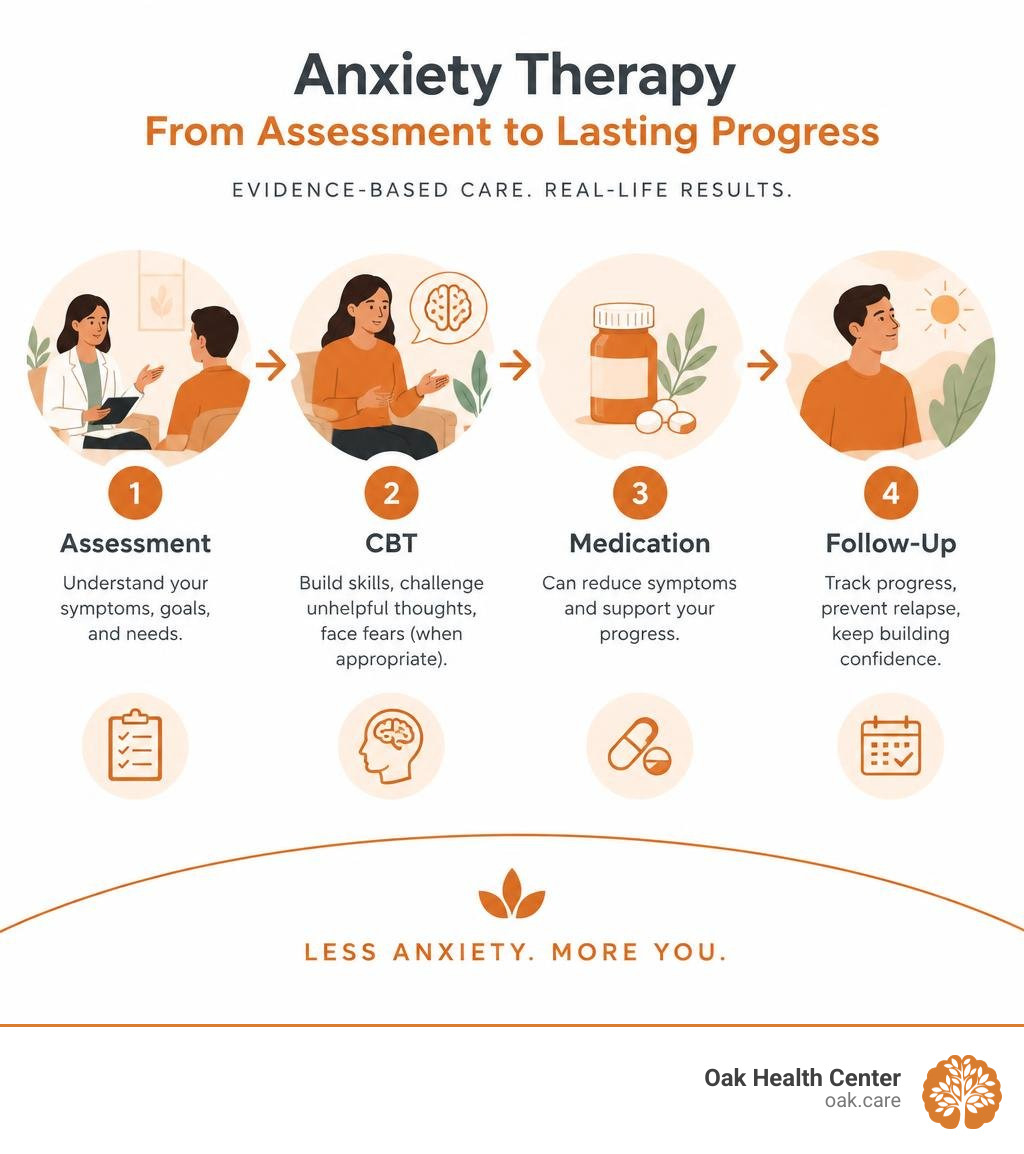
Anxiety therapy can help when worry, panic, fear, or avoidance begins to disrupt your work, relationships, sleep, or daily life. The best first step is to speak with a qualified mental health professional who can assess your symptoms and help you choose a proven treatment. For many anxiety disorders, cognitive behavioral therapy (CBT), including exposure therapy when appropriate, is the leading psychological option. Medication, virtual therapy, and lifestyle changes can also be useful parts of a personal care plan.
Anxiety is common, but it is not something you simply need to push through alone. Effective treatment is practical and active: you learn skills, test fearful predictions, and gradually build confidence in situations anxiety has made harder.
Recovery does not mean never feeling anxious again. It means anxiety has less control over your choices, routines, and goals. Many people begin with weekly therapy, often over 8 to 12 sessions, while others need longer-term or combined support based on symptom severity and their history.
I am Andrew Brewer, Practice Manager at Oak Health Center, where I work with clinical and operational teams to build accessible, patient-centered programs, including psychotherapy services. My work supporting provider growth and coordinated care has given me a practical view of what helps people access consistent, effective anxiety therapy.
Anxiety disorders are among the most widespread mental health challenges worldwide, affecting hundreds of millions of people. Epidemiological data show that specific phobias lead the way with a 12-month prevalence of 10.3%, followed by panic disorder at 6.0%, social anxiety disorder at 2.7%, and generalized anxiety disorder (GAD) at 2.2%. In clinical settings, systematic diagnostic criteria (such as those outlined in the DSM-5-TR) evaluate whether persistent worry, physiological arousal, and avoidance behavior cause significant functional impairment in your daily life.
Understanding Evidence-Based Anxiety Therapy Modalities
When searching for the right care, exploring the ultimate guide to types of psychotherapy for anxiety is an excellent way to understand how clinical approaches differ. First developed by Aaron Beck in the 1960s, cognitive behavioral therapy remains the psychological intervention with the highest level of empirical backing for psychiatric conditions, as detailed in the StatPearls overview on cognitive behavioral therapy.
Modern mental healthcare also incorporates “third-wave” CBT methodologies, such as Acceptance and Commitment Therapy (ACT) and Mindfulness-Based Cognitive Therapy (MBCT). Rather than focusing solely on altering the content of anxious thoughts, third-wave approaches teach you to change your relationship with those thoughts—cultivating psychological flexibility and nonjudgmental awareness. Psychodynamic therapy may also be considered when exploring how unresolved conflicts or early attachment patterns shape current distress.
| Therapy Modality | Core Mechanism | Primary Target | Typical Duration | Best Suited For |
|---|---|---|---|---|
| Cognitive Behavioral Therapy (CBT) | Cognitive restructuring & behavioral experiments | Automatic thoughts, cognitive distortions | 8–12 weekly sessions | GAD, Panic Disorder, Social Anxiety |
| Exposure Therapy | Habituation & inhibitory learning | Avoidance patterns, conditioned fear triggers | 8–16 weekly sessions | Phobias, OCD, Panic with Agoraphobia |
| Third-Wave CBT (ACT / MBCT) | Mindfulness & psychological acceptance | Experiential avoidance, cognitive fusion | 8–16 weekly sessions | Chronic worry, generalized stress |
| Psychodynamic Therapy | Exploring attachment & unconscious conflicts | Relational patterns, unresolved past conflicts | 16+ sessions (longer-term) | Complex anxiety, personality-linked distress |
Cognitive Behavioral Therapy and Exposure Techniques
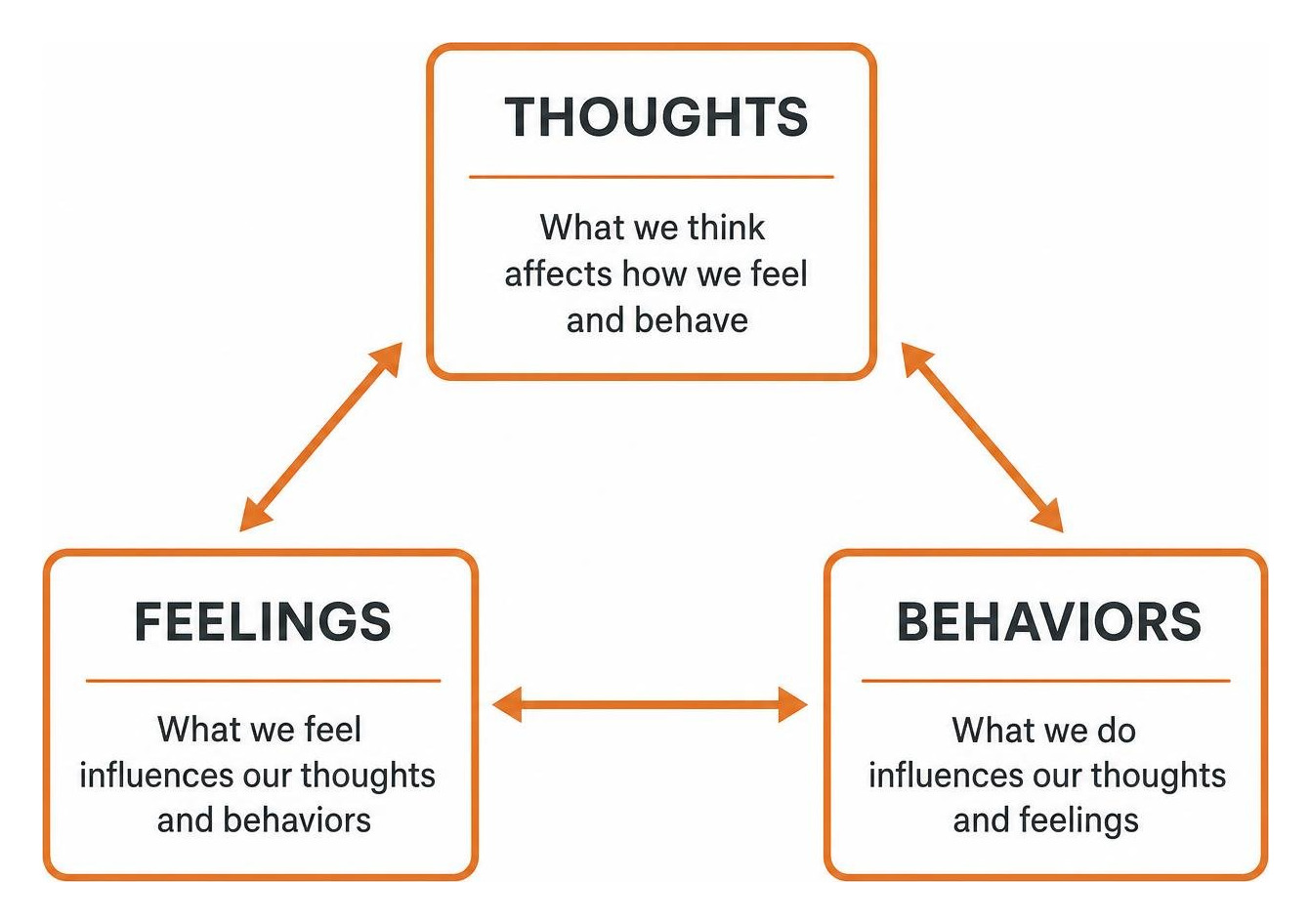
CBT works on a simple premise: your thoughts, feelings, and behaviors constantly influence one another. When anxiety strikes, your brain often defaults to automatic thoughts—such as catastrophizing (“Everything will go wrong”) or mind reading (“Everyone thinks I look ridiculous”). A therapist helps you practice cognitive restructuring, challenging these distortions with objective evidence. You can read more about applying these techniques in our breakdown of mind over matter with CBT and evidence-based therapy.
A cornerstone of behavioral work is exposure therapy. When we avoid what makes us anxious, we accidentally reinforce to our brain that the situation is dangerous. Exposure therapy uses a systematic hierarchy to face feared situations gradually—either through imaginal exercises or real-life (in-vivo) tasks. Over time, you learn that the catastrophic outcome is unlikely to happen and that you can tolerate the physiological sensations of distress. A comprehensive JAMA Psychiatry network meta-analysis of anxiety psychotherapies confirms that CBT packages incorporating exposure maintain durable symptom reduction over long-term follow-ups.
Modern Digital and Virtual Reality Anxiety Therapy
Modern clinical care has expanded how therapy is delivered. Telehealth psychotherapy allows clients to engage in high-quality care without the stress of commuting. Research indicates that CBT delivered via secure videoconferencing achieves clinical outcomes comparable to traditional in-person sessions.
Furthermore, Virtual Reality Exposure Therapy (VRET) has become a powerful clinical tool. As highlighted in the German guidelines for the treatment of anxiety disorders, virtual environments allow therapists to simulate specific phobias (such as heights or flying) or social scenarios in a safe, finely controlled office setting. Guided internet-based CBT (iCBT) interventions also offer structured skill-building to bridge waiting periods or support independent practice.
Psychotherapy vs. Medication: Choosing the Right Approach

A common question is whether you should pursue talk therapy, medication, or both. We often explore managing anxiety without medication for mild-to-moderate symptoms, where structured psychotherapy alone provides lasting relief. However, when symptoms are severe or paralyzing, combining modalities provides the strongest foundation.
Medical reviews, including the clinical guide on anxiety diagnosis and treatment from Mayo Clinic, note that first-line pharmacotherapies include Selective Serotonin Reuptake Inhibitors (SSRIs) and Serotonin-Norepinephrine Reuptake Inhibitors (SNRIs). These medications help balance neurotransmitter activity, taking the edge off acute physiological panic so you can fully participate in behavioral therapy.
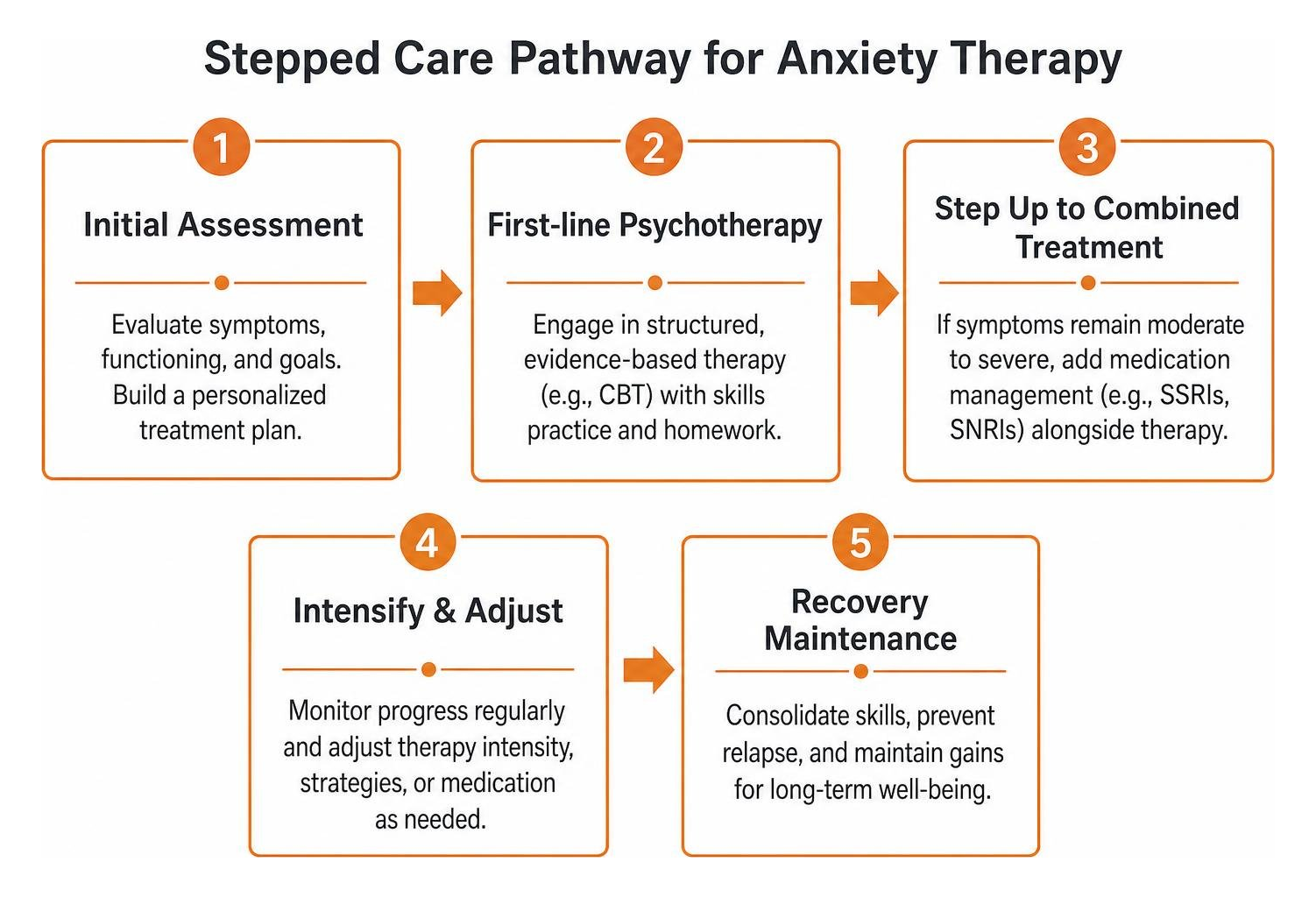
Large-scale healthcare systems utilize a stepped-care model—starting with evidence-based psychological interventions and stepping up to combined medication management whenever higher clinical intensity is warranted.
Maximizing Results: Trust, Homework, and Active Coping
Therapy is not a passive hour where you simply vent while a clinician nods. Real change happens between sessions. Committing to therapy homework—such as thought logs, behavioral experiments, and exposure tasks—is the single strongest predictor of treatment success. If your clinician asks you to touch a doorknob without washing your hands or attend a social gathering without checking your phone for reassurance, doing that work in your everyday environment retrains your nervous system.

Building a strong alliance based on trust with your therapist creates the safety needed to confront uncomfortable feelings. Alongside clinical exercises, our practical field guide to anxiety coping skills outlines foundational lifestyle habits that support therapy. Regular cardiovascular exercise, adequate sleep, and reducing excessive caffeine help lower baseline autonomic arousal. If you find your worries escalating despite good intentions, learning why your anxiety keeps getting worse can help you identify subtle avoidance traps.
What to Expect: Duration, Recovery, and Next Steps
A standard course of individual CBT typically consists of 60-minute weekly sessions across 8 to 12 weeks. In structured public health programs like the NHS Talking Therapies initiative—which treated over 664,000 individuals in a single year—roughly one in two patients achieve full recovery, and two out of three show meaningful clinical improvements.
Recovery does not mean living in a bubble where stress never occurs. Instead, it means you develop the resilience and psychological tools to navigate anxious thoughts without spiraling into avoidance. While a recent meta-analysis on CBT efficacy for anxiety-related disorders highlights that treatment responses vary, systematic adjustments ensure you continue moving forward even if your initial protocol needs fine-tuning.
Finding a Qualified Specialist for Anxiety Therapy
Finding the right clinician makes all the difference. When selecting a therapist, look for licensed providers (such as psychologists, LCSWs, or LMFTs) who specialize in evidence-based modalities and dedicate a substantial portion of their caseload to anxiety disorders. For a deeper understanding of symptom classifications, review our in-depth guide to anxiety disorders.
At Oak Health Center, we simplify access to comprehensive care. Whether you are seeking specialized psychotherapy services or psychiatric medication management, our team works collaboratively to build an individualized care plan suited to your specific goals.
Frequently Asked Questions About Anxiety Treatment
How do I know if my anxiety is severe enough to need professional therapy?
If your anxiety causes regular disruption to your sleep, concentration, relationships, or work performance, seeking professional care is warranted. Clinicians frequently use validated screening tools like the GAD-7; a score indicating moderate to severe distress suggests that self-guided techniques alone may not be sufficient.
How long does therapy for anxiety usually take to show results?
Many individuals notice initial symptom relief within 4 to 6 weeks as they learn coping strategies and cognitive reframing. A standard, comprehensive course of CBT generally spans 8 to 12 weekly sessions to establish long-term behavioral habituation and prevent relapse.
What should I do if my anxiety therapy isn’t working?
If you are not seeing progress after several weeks, discuss this openly with your therapist. Solutions include re-evaluating the therapeutic alliance, increasing the difficulty of exposure exercises, incorporating third-wave acceptance strategies, or consulting a psychiatric provider to discuss adjunctive medication options.
Conclusion
Living with anxiety can feel exhausting, but evidence-based treatments provide a clear, proven path toward relief and long-term resilience. At Oak Health Center, we provide compassionate, individualized mental healthcare across Southern California—with clinics in Beverly Hills, Fullerton, Laguna Hills, Rancho Cucamonga, and South Pasadena, alongside statewide virtual services across California.
If you notice everyday signs of anxiety impacting your quality of life, take the first step today. Reach out to Oak Health Center to schedule a comprehensive evaluation and start your journey toward lasting wellness.